Your Stress Management Training Headquarters

StressStop just released 3 new films on Emontional Intelligence featuring Dan Goleman.

Stress Management Videos and Online Training

Stress Management Training: Thinking Well Online: a 5-part Cognitive Restructuring Course
Stress Management Training: The Stress Profiler Online

Our Stress Management Products

StressStop's Stress Management Training YouTube Channel

Loading...

Biodot Question and Answer

QUESTION: How do biodots help people reduce stress?

ANSWER: As a rudimentary biofeedback device, biodots give you biological feedback about what's going on inside your body. The information, or feedback that it gives you let's you know whether your efforts have been successful. Say you were trying to meditate as a way of lowering stress. At the end of the twenty minute meditation period, how would you know whether your meditation had actually worked to help you relax? If you were wearing a biodot, and it had turned from black to blue you'd know that the temperature just beneath the surface of your skin had increased and (by deduction) you would know that your capillaries had opened up, that the blood flow had improved and that you had activated the relaxation response. That's how biodots help people to reduce stress. By giving you feedback on internal functions of the body that you can't detect in any other way.

BioDot FAQs Biodot Product Page

BioDots®

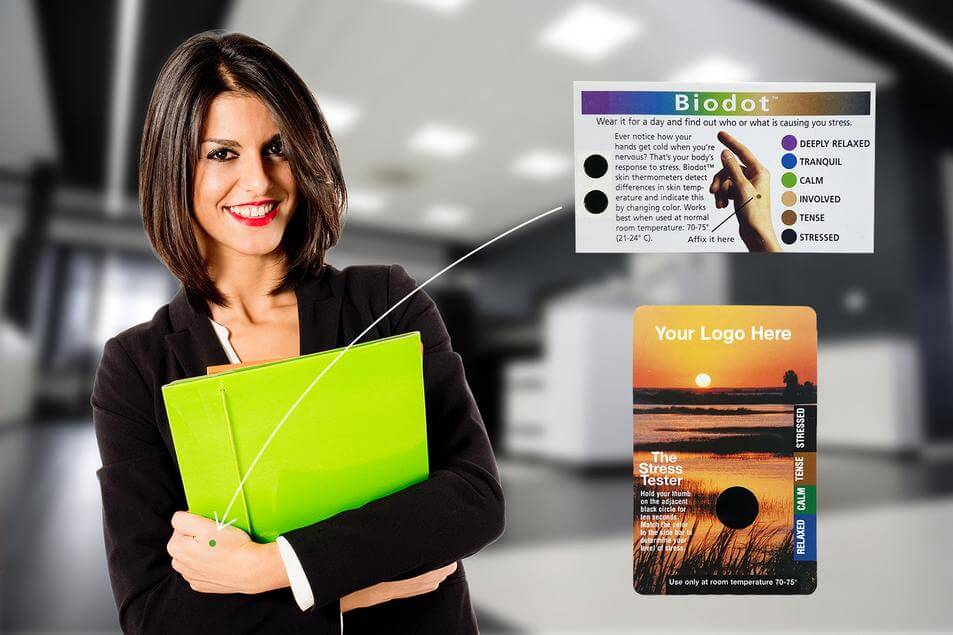
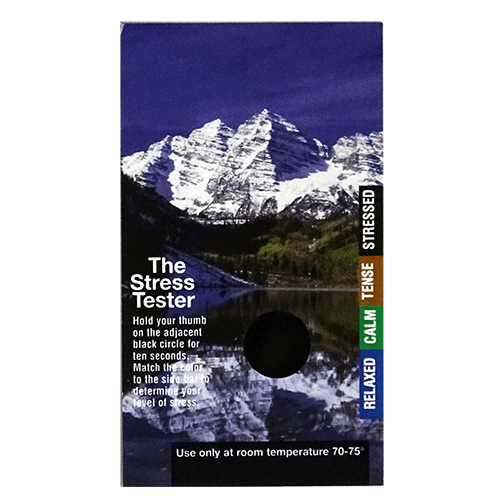
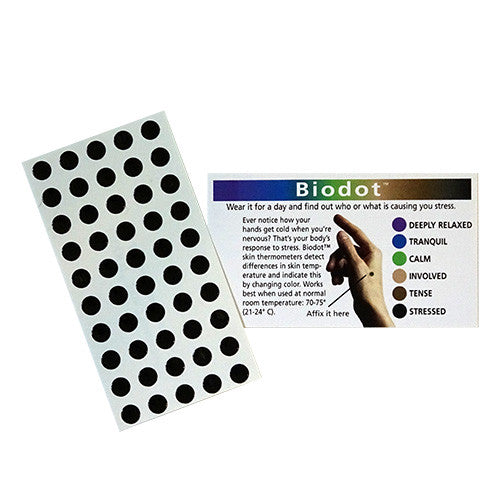
Biodots are tiny skin thermometers that tell you who or what causes your stress. Apply the dots to your hand or use a stress testing card with your thumb.
Learn More

The Stress Profiler

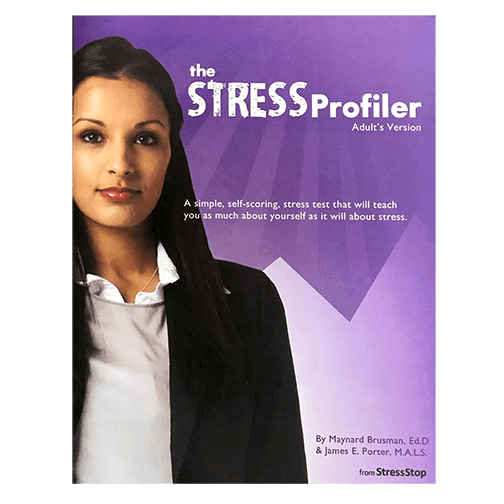
Our workbooks and handouts help you determine your level of stress and give you advice on how to cope with stress.
Learn More

Learning

Our instructional DVDs makes it easy for people to see the cumulative benefit of practicing stress management every day and building their resiliency skills over time.
Learn More

Relaxation

Our relaxation CDs have a narrator who guides you through a variety of different relaxation techniques laid over a bed of soothing music.
Learn More

From The Blog

Job Stress: Finding The Job That Has The Right Amount Of Stress For You

Job Stress:  Finding The Job That Has The Right Amount Of Stress For YouA couple of weeks ago I met a British Airlines flight attendant while we were riding stationary bikes at the gym in the hotel where we were both staying. She had arrived from London about six o'clock the night before and told me she would be leaving on an 11-hour flight back to London later that same day. While she was telling me this, I couldn't help but think of the studies I had recently seen about the negative effects of short layovers on the brain and memory in flight attendants. Short layovers affect memory in flight attendants. Everyone copes with stress differently, so, when I asked if her job was stressful, I wasn't too surprised when she told me she wasn't fazed by the quick turnarounds at all. "My last job as a school teacher," she explained, "was way more stressful than this job." This positive attitude reminded me that a lot of the stress we experience on the job is psychological and involves negative thinking, worry and over-reacting to criticism. As the result, job stress is often best dealt with by using psychological techniques like maintaining a positive perspective. She was quick to let go of the stress in her current career by highlighting the positive differences between her current job and her former job.

Authors Series

Dan SiegelUCLA Brain scientist and best-selling author, Daniel Siegel discusses Mindsight and his latest book.


Listen to the interview below:

Get Social

Book Spotlight

Invisible Heroes: Survivors of Trauma and How they Heal
By: Belleruth Naparstek
Read Jim's Review >

Beleruth Naparstek: Invisible HeroesIf you or someone you love has suffered a traumatic event, you know the devastating impact it can have on your life and your spirit. Life-threatening accidents, illnesses, assaults, abusive relationships-or a tragedy like 9/11-all can leave deep emotional wounds that persist long after physical scars have healed. Survivors become "invisible heroes," courageously struggling to lead normal lives in spite of symptoms so baffling and disturbing that they sometimes doubt their own sanity. Now there is new hope for the millions affected by posttraumatic stress disorder (PTSD). Drawing on more than thirty years' experience as a therapist and on the most recent cutting-edge research, Belleruth Naparstek presents a clinically proven program for recovery using the potent tool of guided imagery. She reveals how guided imagery goes straight to the right side of the brain, where it impacts the nonverbal wiring of the nervous system itself, the key to alleviating suffering.
More Information

Quick Stress Tips

Take a Shower at the End of the Day Instead of the Beginning

It feels great, it helps you relax, you don't have to rush through it and (we promise) you won't get dirty over night. When you flip flop this activity around it will free up an extra 20-30 minutes in the morning when you need it most.